Things to know before your first driving lesson
Make sure you're prepared for your first driving lesson...here's what you need to know.


About to start learning to drive? Here’s the learning to drive checklist every learner needs. Plus tips on how to prepare and what to expect on your first driving lesson.
When can you start learning to drive?
You can drive a car on a public road in the UK with a provisional licence once you’re 17 years old. There are a couple of exceptions to this rule. For example, you can start at 16 if you get the enhanced rate of the mobility part of Personal Independence Payment (PIP). Find out more in our guide to what age you can learn to drive.
It’s all very exciting. But before you run to the phone to book your first driving lesson, there are some things you’ll need to sort out.
Learning to drive checklist
We have created a checklist to prepare you for when you learn to drive.
1. Get your provisional licence
You need to have a provisional licence before you can start driving. You can apply for your provisional licence on GOV.UK once you’re 15 years and 9 months old.
While this may sound like an oddly specific age, it’s for a good reason. You can learn to drive a moped with a provisional licence at 16, so it allows a few months for the licence to arrive. But, if you just want to learn to drive a car, don’t worry about applying until a few months before your 17th birthday.
When applying for a provisional licence you’ll need:
- To meet the minimum eyesight requirements. This means you’ve got to be able to read a car number plate made after September 2001 from a distance of 20 metres. For you sports fans, that’s about the length of a cricket pitch.
- Proof of ID, this will be your passport number if you’re a UK citizen.
- Addresses that you’ve lived in over the last 3 years.
- £34 to pay the online fee, this can be done with a debit or credit card. It’s £43 if you apply by post.
Read our full guide to provisional licences.
2. Get some L plates
Those all-important red and white L plates. You’ll need an L plate on both the front and back of your car so that it’s easy to see. You can get up to 6 points on your licence for driving without L plates, so it’s not something you want to forget.
Magnetic L plates tend to be the most popular. They’re easy to stick on and off, which is handy if you’re driving someone else’s car.
In Wales you’re also allowed to use a D plate instead of an L plate. D stands for “dysgwr” meaning “learner” in Welsh. Yes, we promise “dysgwr” is actually a word, just don’t ask us how to pronounce it.
3. Do learner drivers need insurance?
If you’re driving with a qualified driving instructor, the fee you pay them will cover the cost of your insurance. But if you want to drive outside of your lessons, you’ll need to sort out some insurance.
With our driving insurance for learner drivers, you can drive in a friend or family member’s car for up to 180 days. Find out how it works alongside the car owner’s own policy on our page about insuring your parents’ car.
4. Finding a driving instructor or supervisor
Until you’ve passed your test, you’re not allowed to drive without a supervisor, so no solo road trips just yet team. First things first you need to find yourself a good driving instructor. Check out this article that explains how to find a good driving instructor.
Ask friends and family for recommendations and read reviews, then call a few instructors on your shortlist. Ask about their prices and availability, their pass rate, roughly how many hours they think you’ll need and their cancellation policy.
Then when you’re feeling confident enough, you can get some private practice outside of your lessons with a friend or family member. But no matter how good your Dad reckons he is at driving, leave it to the professionals when you’re starting out. You don’t want to pick up bad habits before you even get going.
There are a couple of rules you should know about if you’re planning on driving with a friend or family member:
- You’re NOT allowed to drive on the motorway. As a learner you can only go on the motorway in a dual control car with a qualified driving instructor.
- Your supervisor needs to have held a full licence for 3 or more years, for the type of car you’re learning in.
- They’ve got to be 21 or over. Some insurers set a higher minimum age for supervisors, so check the rules on your learner driver insurance before you set off.
Want to know what all the rules are? Read our full guide to supervising a learner driver.
5. Prepare for your theory test
Want to pass your driving test first time? The sooner you can get your theory test under your belt, the better.
The test is split into two sections: multiple choice and hazard perception. It’s based on three books:
These books can definitely help with theory test revision. But there are also lots of apps and online resources that will be great practice for your theory test. Our guide on how to pass your theory test has tips on choosing one.
Book your theory test ahead of time! More often than not, there’s a long waiting list for test slots. You can’t take your practical test until you’ve passed your theory. And knowing the Highway Code will help you on your journey of learning to drive. You can book your theory test on GOV.UK. You’ll need your licence number, email address and a card to cover the £23 fee.
Should you pass your theory before you start lessons? Some instructors ask you to, because practical test waiting lists can be long. Others are happy for you to do both at once, so you can put your revision into practice in the car. Either works, so talk it through with your instructor.
6. Budget for learning to drive
Lessons aren’t the only cost to plan for:
- Your provisional licence: £34 online
- Theory test revision materials, such as an app or book
- The theory test: £23 per attempt
- Driving lessons, which vary in price across the UK
- Insurance for any private practice
- The practical test: £62 per attempt on a weekday
- Your instructor’s time and car on test day, often 2 to 3 hours at their usual rate
Only around half of practical tests are passed, so it’s worth budgeting for more than one attempt. If you pass first time, you’ll have a bit of money to spare. Our guide to the cost of learning to drive breaks it all down.
How many driving lessons will I need?
It varies a lot from person to person. On average, the DVSA says learners need around 45 hours of lessons with an instructor plus 22 hours of private practice. If you can’t get any private practice, expect to need more lessons.
Be honest with yourself about how quickly you pick up new skills and how you cope with new situations. Your instructor can only give you a rough estimate until they’ve seen you drive.
First driving lesson tips
So, your first ever driving lesson is coming up. You’re realising you’ll soon have the responsibility of sitting in the driver’s seat. It’s a little nerve-racking. Beat those nerves by making sure you’re up to speed on how to prepare and what to expect. Let’s go.
- Brush up on the Highway Code. Have a look at some of the theory test resources available so you know the basics before you get behind the wheel.
- Watch a YouTube video of a driving lesson to give you an idea of what’s coming.
- Find out what the deal is with payment; do you need to bring cash or will you bank transfer the money?
- Don’t forget your provisional licence and glasses or contact lenses if you need them.
- Make sure you’re clear on where you’re getting picked up and at what time. It’s a good idea to be prepared and get there 5 minutes early.
What to expect on your first driving lesson
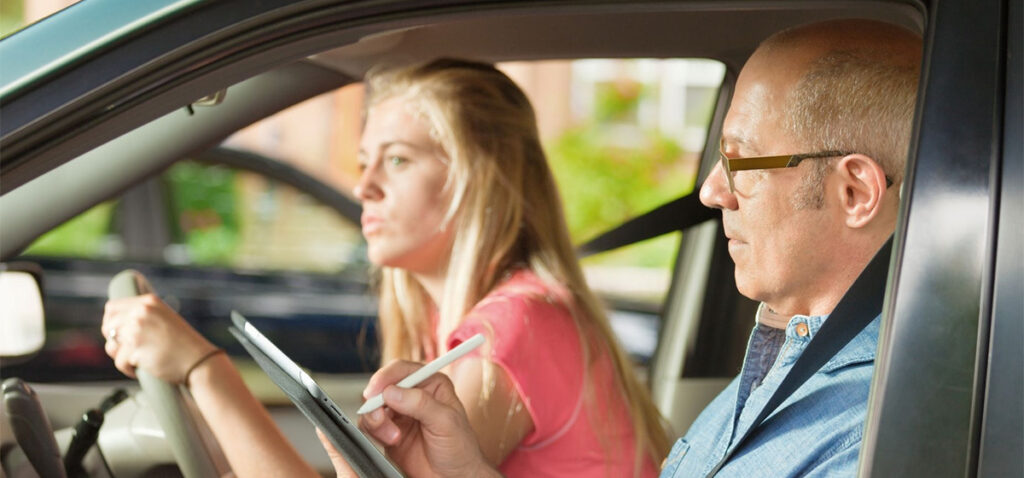
Depending on where you get picked up, you may not get behind the wheel straight away. If you live on a busy main road, your driving instructor will pick you up and drive to a more quiet area. And if you’re panicking that you have literally no idea what you’re doing, don’t worry. Your instructor will use your first lesson to run through all the basics.
What’s the cockpit drill?
The cockpit drill is probably the first thing you’ll get taught on your driving lesson. “Cockpit drill” makes it sound a bit scary and complicated. But it’s just a series of checks all drivers should do before they turn their car on.
- Doors: are the boot, the bonnet and all doors closed properly?
- Seat: is your seat adjusted to the right position? You should be able to reach all the control pedals without having to stretch.
- Steering: is your steering wheel adjustable? Your hands should be resting comfortably a little lower than your shoulders.
- Seatbelt: it’s time to get buckled in.
- Mirrors: adjust all your mirrors properly to avoid blind spots.
What are you likely to cover in your first driving lesson?
- The cockpit drill.
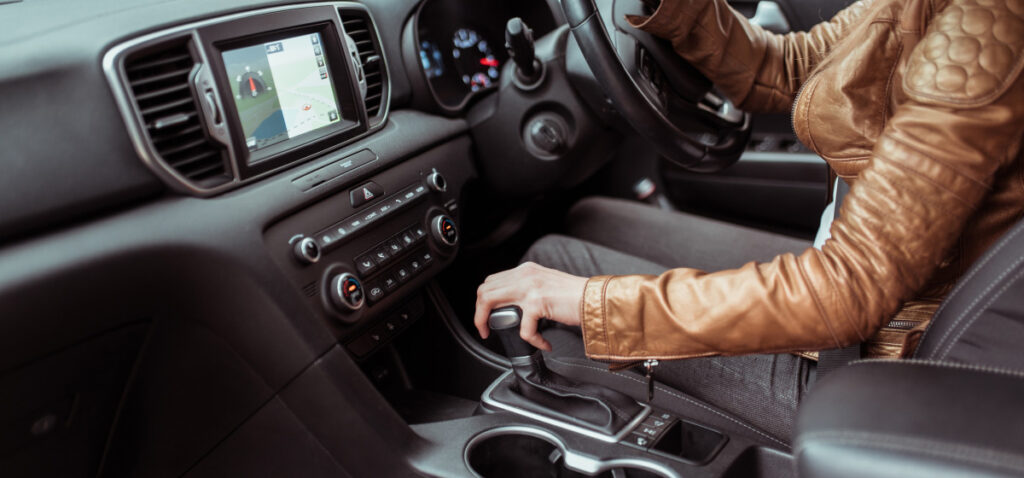
- How to use all the controls: accelerator, clutch, brake, handbrake, and indicators.
- Checking your mirrors and blind spots.
- Moving off safely using the “Prepare, Observe, Move” routine.
- How to change gears.
- Clutch control using the biting point.
- Safely stopping the car and pulling up to park on the road.
When it comes to setting up before you drive it can always be helpful to get a visual guide as to what to do, as descriptions will only take you so far!
Cockpit drill: how to set up your car before driving
How to make the most of your driving lessons
Lessons are a big investment, so it pays to get as much as you can out of each one.
- Agree a goal for each lesson. Go over what you’ll be working on at the start. If you’re still revising for your theory test, read up on that topic beforehand.
- Ask for feedback. At the end of each lesson, ask what went well, what needs work and what you’ll focus on next time.
- Arrive prepared. Jot down notes after each lesson and read them before the next one. It’s easier to take information in while you’re parked than on the move.
- Ask questions. If you’re unsure about an instruction, ask. Good instructors welcome questions.
- Use your private practice well. Ask your instructor what to work on when you practise with family or friends, and share those goals with whoever is supervising you.
Getting test ready
When your instructor thinks you’re nearly ready, they may run some mock tests, starting informally and getting more realistic as your confidence grows. Don’t be discouraged if you don’t pass a mock. Treat it as a chance to find out what still needs work.
Before you book your practical test, check the date and time with your instructor, because you’ll usually need their car on the day. If they tell you you’re not ready yet, trust them. They want you to pass, and a fail could mean waiting weeks or months for another test. Read up on what happens during the driving test on GOV.UK, and see our guide to preparing for driving test day.
Still nervous about learning to drive?
We know it may sound like a lot, but don’t forget that your instructor will have dual controls. That means they have pedals on their side of the car, so they can help you out if you’re struggling. They’ll guide you through everything at your own pace. You don’t need to have it all figured out on your first lesson. If nerves are getting in the way, our guide to learning to drive with anxiety could help. Like anything, being a good driver comes with time and practice. You’ll be great. Good luck!