Driving test day: how to prepare and what to expect
The day you take your driving test can be one of the most nerve wracking days of your life and it’s easy to get overwhelmed. Here’s what to expect on test day.


The day of your driving test is definitely nerve-racking for most. But it doesn’t have to be! By this point you should have received plenty of instruction and practice. Remember that, during your test, you won’t be asked to do anything that you haven’t already done dozens of times before during your lessons.
Are you ready for your driving test?
Before you get to test day, it’s worth asking whether you’re ready to book. You can never be 100% sure you’ll pass, but these 4 questions give you a good idea. Being nervous isn’t a bad sign, by the way. Instructors often find that overconfident learners take less care on the road.
1. Is your instructor still stepping in a lot?
Think back to your last few lessons. If your instructor still has to tell you when to brake for a junction, or talk you through your reverse park, you’re probably not quite ready. If they’ve sat quietly and had little to say at the end, that’s a great sign you’re making the right decisions on your own.
2. Have you passed a mock test?
A mock test is the best way to find out if you’re ready, and it gives you a feel for the real thing. Ask your instructor to include the manoeuvre you find hardest, such as a parallel park.
If you didn’t pass your mock, it doesn’t necessarily mean you’re not ready. If you can see where you went wrong and fix it, talk it through with your instructor.
3. Does your instructor think you’re ready?
Your instructor knows your driving better than anyone. If they think you’re ready, be confident. If they say you’re not, listen to them and keep going. Extra practice with a friend or family member, using learner driver insurance, could help you get there sooner.
4. Are you comfortable driving somewhere new?
If you know every junction and roundabout in your area, lessons can get a bit repetitive. Make sure you’re still comfortable on roads you don’t know, because your test route won’t always be familiar.
If you can answer yes to all 4, read our guide on how to book your driving test.
The night before the driving test
Get plenty of sleep the night before, if you can. This’ll help you focus during the test. If you’re tired, you run the risk of your reactions being slower than usual. So get those ZZZs in!
You might find it’s best not to tell friends or family you’re doing the test. That way, you avoid the pressure of expectations. And hopefully duck any ill-judged horror stories.
The morning of the driving test
Most driving instructors will recommend that you have a lesson just before your test. This usually lasts an hour and is a chance to warm up. Shake off your pre-test nerves and make mistakes so you don’t repeat them during the test.
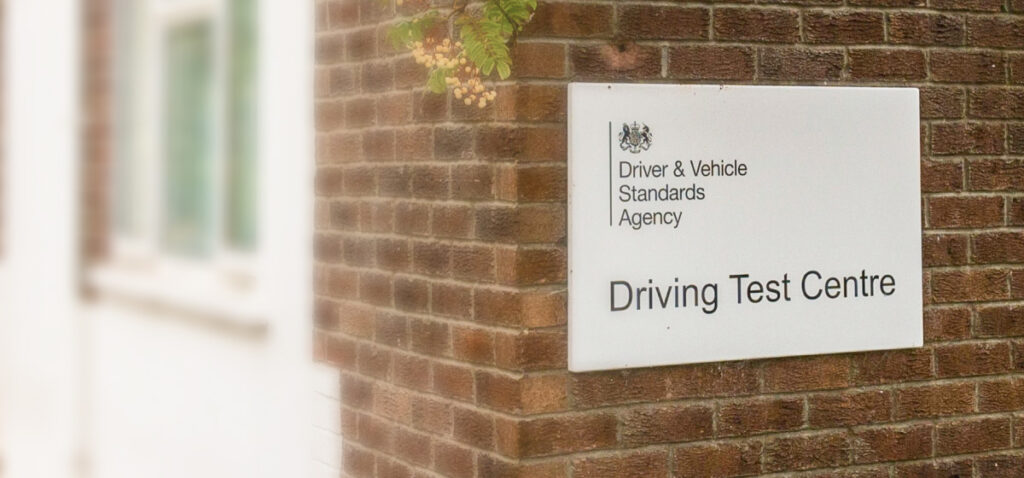
It’s a good idea to turn up about 15 minutes before the test is due to begin. This way, you’ll have time to let them know who you are, grab a glass of water, go to the bathroom, all without being hurried, but you won’t be hanging around too long either.
What do I need to bring to my practical driving test?
There are a few things you’ll need to make sure you bring with you for your driving test:
- Your provisional licence
- Your theory test pass certificate
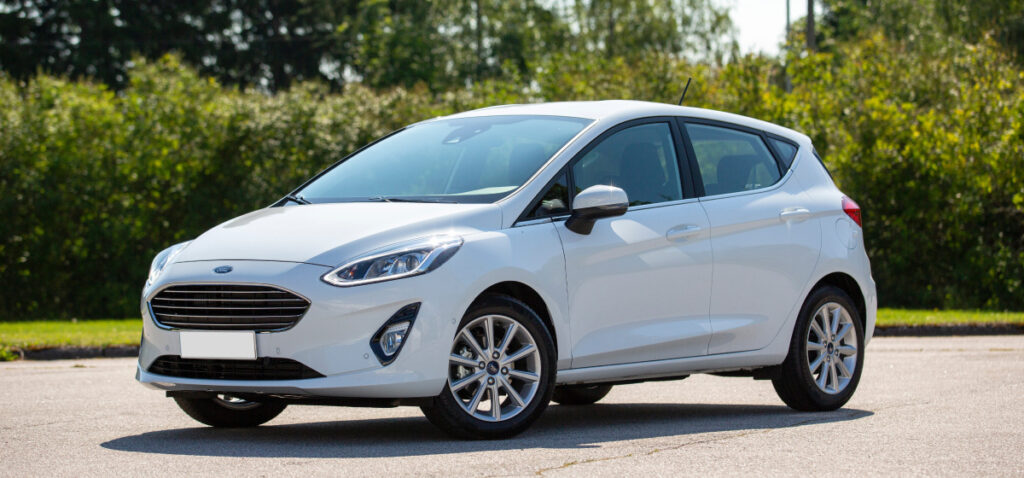
- A car: most people use their driving instructor’s, but you can use your own car or borrow a friend or family members’ (just make sure you’re covered with learner driver insurance)
What happens at the start of the driving test?
Before you begin, the examiner will test your eyesight. You’ll have to read a number plate on a parked car from a distance of 20 metres. If you fail the eyesight check, you’ll fail your driving test.
You’ll also be asked 2 vehicle safety questions, called ‘show me, tell me’. You’ll answer the ‘tell me’ question by explaining something before you start driving, and the ‘show me’ question by showing the examiner how to do something while you’re driving.
How many car lengths is 20 metres?
20 metres is around 5 car lengths. So you can easily test if your eyesight is good enough for your driving test by checking if you can see a clean number plate at a distance of 5 car lengths away.
What can I expect during my driving test?
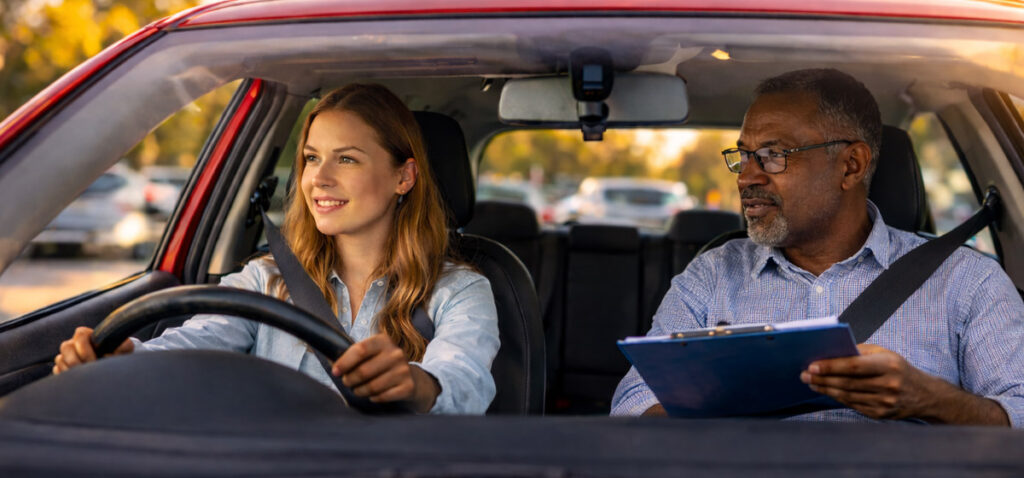
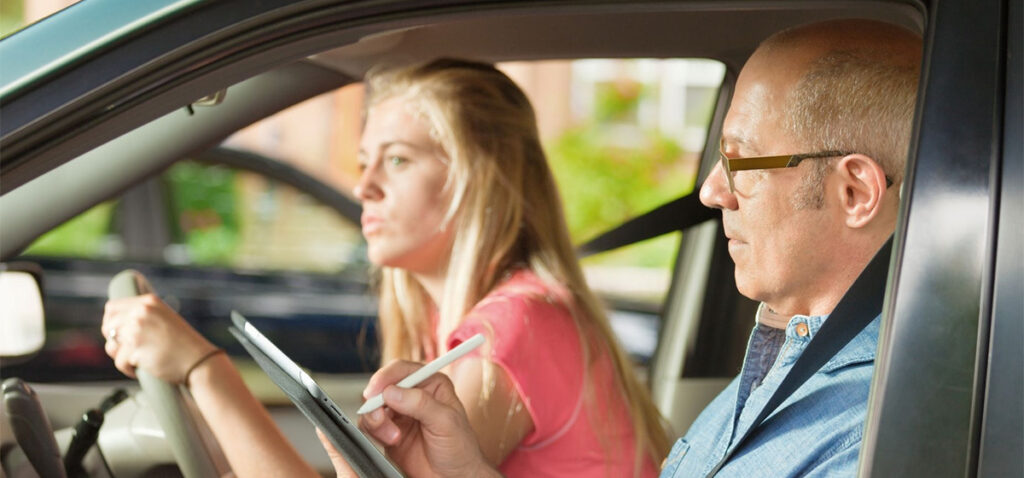
The practical driving test takes around 40 minutes. During this time, your general driving ability and skills will be tested in a variety of road and traffic conditions.
You’ll be tested on the following during your test:
- An eyesight check
- ‘Show me, tell me’ vehicle safety questions
- General driving ability
- Reversing your vehicle (see our guide to driving test manoeuvres)
- Independent driving
You may also be asked to complete an emergency stop. Don’t fret though: you won’t be asked to do it while it’s hazardous to do so.
For more detail, see the GOV.UK guide to what happens during the driving test.
Important things to remember during the test
- You’re not a qualified driver, so the examiner isn’t expecting you to be perfect.
- Forgetting directions or taking a wrong turn won’t affect your test result. Qualified drivers do it all the time.
- You’re allowed to make up to 15 small mistakes or driving faults, often called minors, before your test result is affected. So don’t panic if you do something wrong!
- But you will fail if you make more than 15 minor faults, or have one serious or dangerous fault. Our guide to driving test faults explains the difference.
What happens after my driving test?
Your examiner will let you know if you’ve passed or failed as soon as you park back up in the test centre. If you’ve passed your test the examiner will:
- Tell you what faults you made, if any
- Give you a pass certificate
- Ask if you want your full licence to be sent to you automatically (within 3 weeks). If so, give the examiner your provisional licence
Congratulations, you clever sausage! You can start driving straight away. But learner cover is for provisional licence holders, so check your learner driver insurance policy before you drive home on it.
If you haven’t sorted your own policy yet, you’ll need cover in place before you drive, even if it’s just to get you home. Look at temporary car insurance or new driver insurance, and check the eligibility rules on each page before you buy.
If you haven’t passed, the examiner will let you know what faults you made. Remember it’s not the end of the world. You can book another test straight away, but you’ll have to wait at least 10 working days before you take it. To help you further, we’ve got some useful advice on the most common driving test faults.