Theory test practice: what are these road signs?
Here are some of the signs that UK drivers get wrong most often!

There are a lot of road signs in the UK and it can feel a little overwhelming when it’s time to revise for your theory test.
We’re going to cover the different types of road signs and what they mean. Plus we’ll go through some of the most common and the most difficult road signs to get you ready for theory test day, and the signs experienced drivers often forget.
Road sign shapes and colours
First up, let’s break it down to what the different shapes and colours of road signs mean. Generally, road signs will fit into these 3 common shapes.
Triangle road signs
Triangle road signs are there to warn you about an upcoming hazard. If you see a triangular road sign, it’s warning you about something coming up, so generally it’s time to slow down and be on alert.
- Almost all triangles are red, which makes it nice and easy to remember it’s a warning sign
Circle road signs
Circle road signs give orders. Yes, that’s as official as it sounds! If you don’t follow the order of circle road signs, you could be breaking the law. For example, overtaking when there’s a no overtaking sign is against the law, so you don’t want to get caught out just because you didn’t understand the sign.
- Blue circles give an instruction that you must follow such as turn left
- Red circles tell you what you must not do such as overtake
Rectangle road signs
Rectangle signs are generally giving you information of some kind. Examples include parking restrictions, directions and bus lanes.
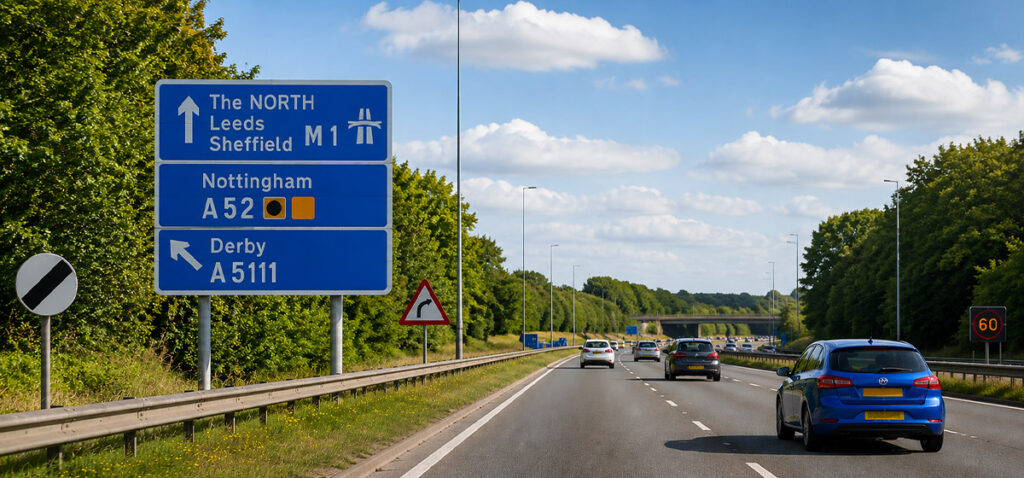
- Blue rectangles are used to give information, except for on motorways where blue rectangles give directions
- Brown rectangles are for tourist information. Always exciting when you’re on your way to a theme park and you see that brown rectangle telling you you’re nearly there!
- Green rectangles are used for giving directions on primary routes
- White rectangles are used for giving directions on non-primary routes or you may see them in combination with a warning or regulatory sign to give more information
UK road signs and what they mean
Okay so now you know some of the basics, let’s run through some road signs and their meanings to get you up to scratch for your theory test. We’ll go through a mixture of common road signs and road signs we know that people find hard on their theory test to make sure we cover all bases.
A great way to nail UK road signs is to combine theory and practice. Once you know what they mean, the best way to remember them is to see them on the road, so get out with your instructor or with learner driver insurance and spot them first hand.
Road work sign

The road work sign is a red triangle meaning that it’s warning you there will be people working on or near the road. Often you’ll find there’s also a reduced speed limit so keep an eye out and take care.
No through roads sign

No through road signs basically mean there is a dead end. They’re blue meaning they’re giving you information and should be easily recognisable from the horizontal red stripe on top of a vertical white stripe.
No entry road sign

The no entry road sign is a red circle with a white rectangle across its face. The red circle means it’s telling you what not to do. In this case it’s telling you not to enter a particular area.
Road narrows sign

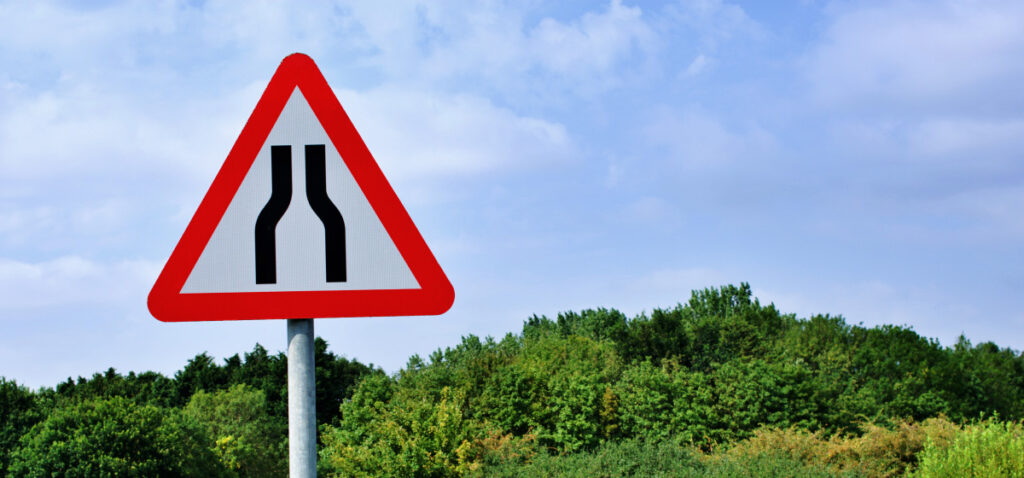
It’s another red triangle road sign, so you know the drill by now. The road narrows sign is warning you that the road ahead will not be as wide as the road you’re currently driving on.
Motorway countdown markers

This is a blue rectangle on the motorway so it’s giving you directions. Motorway countdown markers let you know you’re coming up to an exit, each bar represents 100 yards from the motorway exit.
Check out our guide to driving on the motorway.
Level crossing countdown markers
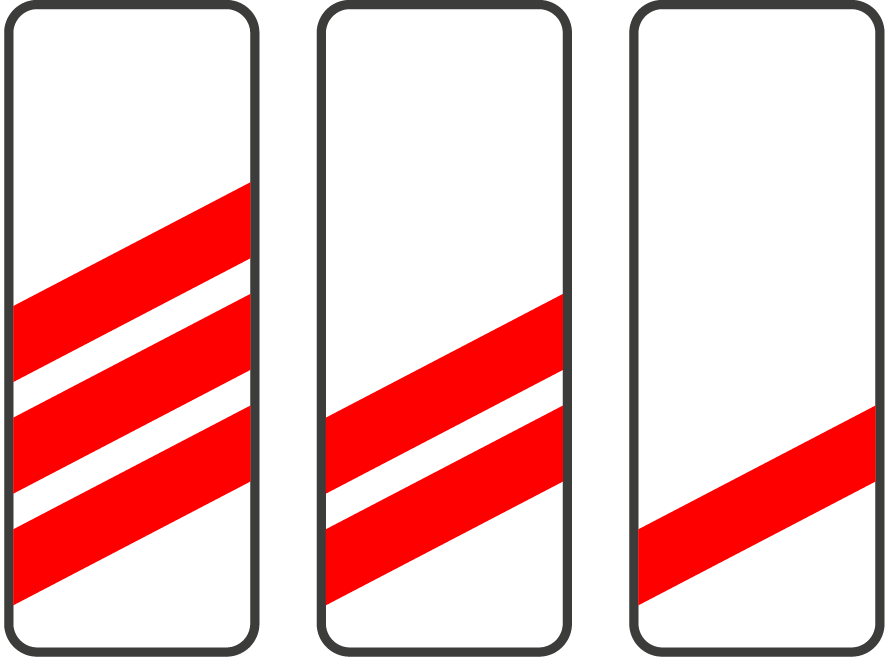
We thought we’d throw this one in the mix because we know it can confuse people. The level crossing countdown markers are the same as for a motorway but in a different colour.
So if you see it in red and white, remember it’s a level crossing. Level crossings usually have a red and white entry bar which may help remind you.
No motor vehicles road sign

When you see this sign, it’s often alongside a plate below with a further explanation. The car and motorbike inside the red circle mean “no motor vehicles”, so cars and motorbikes can’t go any further. Pedestrians and cyclists can still use the road.
Uneven road sign

This sign is warning you that there’s an uneven road ahead. That means it could be time to bounce over some bumps and avoid some potholes, so you’ll need to slow down.
Adverse camber sign

Adverse camber means the road slopes the opposite way to the bend, rather than tilting into it. That can make vehicles less stable, especially high-sided ones like lorries. It sounds scary, but it’s just there so that all drivers on the road are aware, don’t drive too quickly and keep a safe distance.
5 road signs drivers often forget
Most drivers learn road signs for their theory test, but over time it’s easy to forget the ones you don’t see every day. Here are 5 that often catch people out, whether you’re revising or you passed years ago.
1. National speed limit
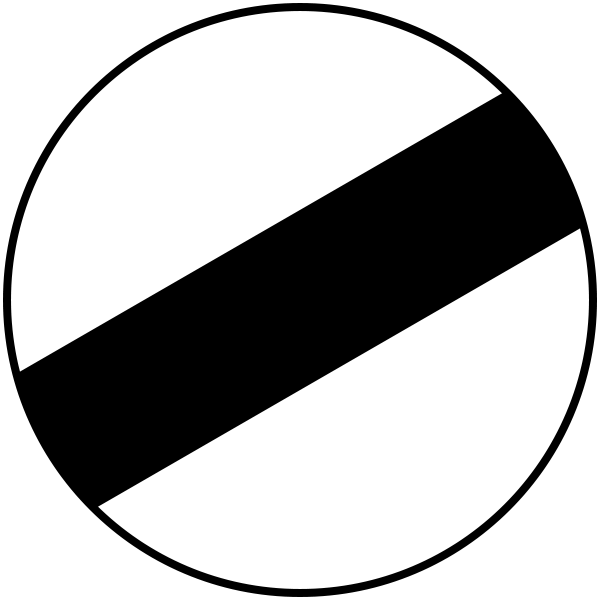
The white circle with a black diagonal stripe is one of the most common signs on UK roads, and one of the most misunderstood. It means the national speed limit applies, but what that limit is depends on the type of road.
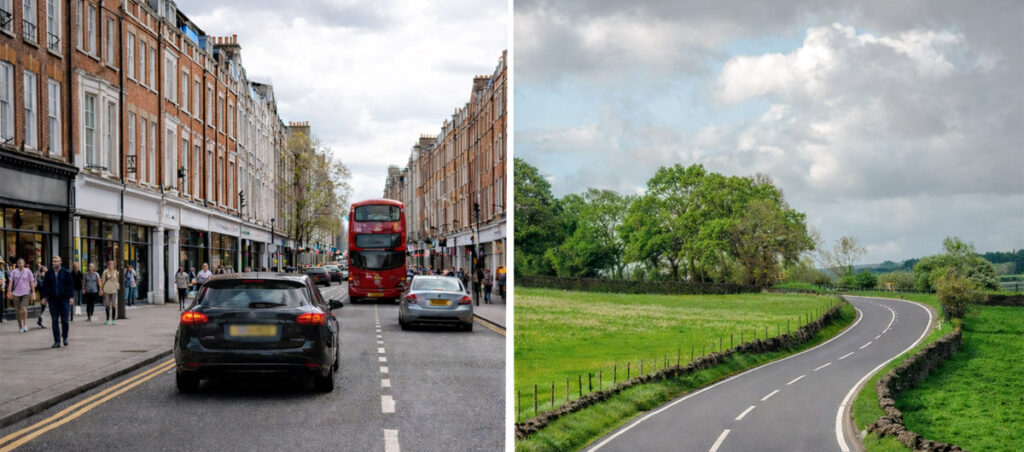
For cars, it’s 60mph on a single carriageway and 70mph on a dual carriageway or motorway. The difference is the central reservation. If there’s a physical divider between the 2 directions of traffic, it’s a dual carriageway. If not, it’s a single carriageway, even if it briefly opens into 2 lanes for overtaking. Our guide to national speed limits covers the limits for other vehicles.
2. Minimum speed limit
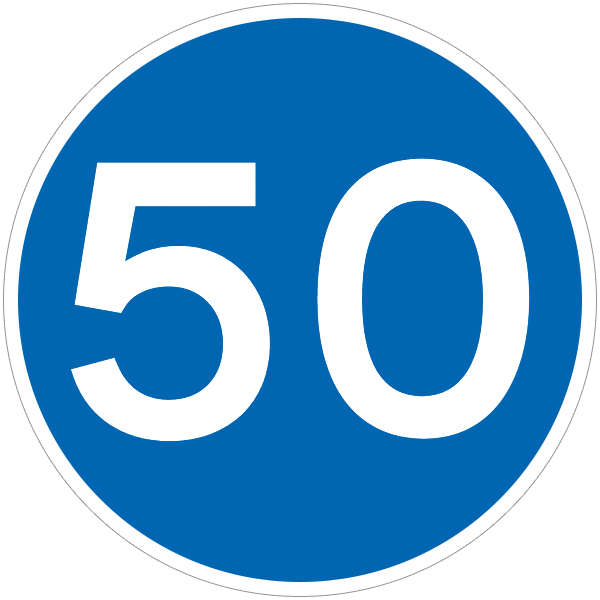
A blue circle with a white number shows the minimum speed you should drive at in normal conditions. Remember, blue circles give an instruction. You’ll see them in places like tunnels, where keeping traffic moving matters. It’s easy to focus on maximum limits, but sometimes driving too slowly is a problem too.
3. Soft verges
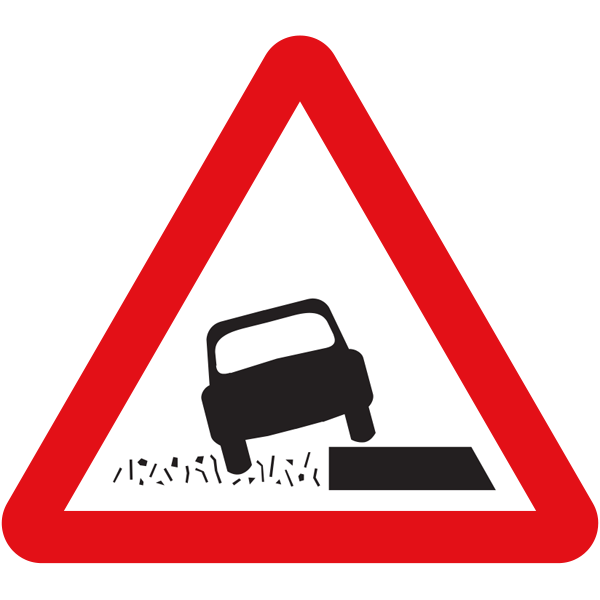
This sign warns that the edge of the road may not be firm enough to support a car. It’s most common on rural roads, where you might need to pull over to let another car pass. Move too far onto a soft verge and you could lose grip or get stuck.
4. Staggered junction
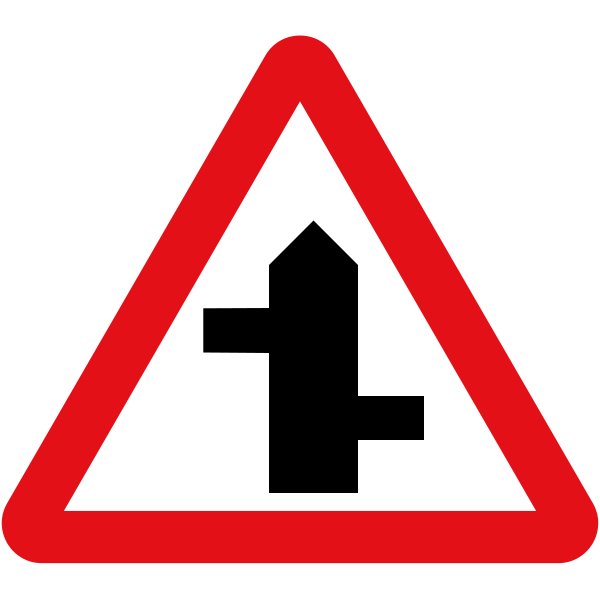
This sign shows 2 side roads joining the main road at slightly different points. Traffic may cross your path in 2 stages rather than from one direction, so approach carefully and allow extra time.
5. Ford
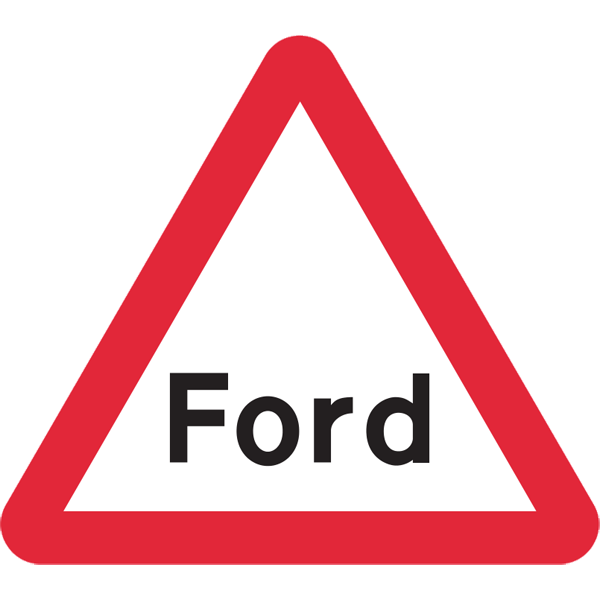
This sign means water flows across the road ahead. Even shallow water can affect your grip and braking, and deeper water can damage your car or leave you stranded. Check the depth before you drive through, go slowly, and test your brakes once you’re out.
Preparing for your theory test
The ‘Know your traffic signs’ book is a really useful, and totally free, resource that lists all of the UK road signs.
Then when you’re out and about you can be constantly testing yourself on the road signs you see. If you spot one you don’t recognise, look it up! Practice makes perfect and you might find a theory test app helpful to make sure you’re up to scratch on all your road signs and theory test knowledge.
It’s worth revisiting The Highway Code now and then after you pass, too. Recognising signs quickly helps you make better decisions and avoid last-minute reactions, especially when you’re driving somewhere new.
We’ve also got a whole guide dedicated to passing your theory test which should help you get prepared.
Start practising your driving
If you’ve already started with your driving lessons, it might be a good idea to get in some extra practice with a friend or family member. See how our learner driver insurance works, and read our guide to the No Claims Bonus if you’re practising in someone else’s car. Grab your L plates and hit the road.