The hidden effects of hot weather on your car
Hot weather doesn't just affect drivers - it can affect your car too. Here are five ways a heatwave could have more of an impact than you might think.

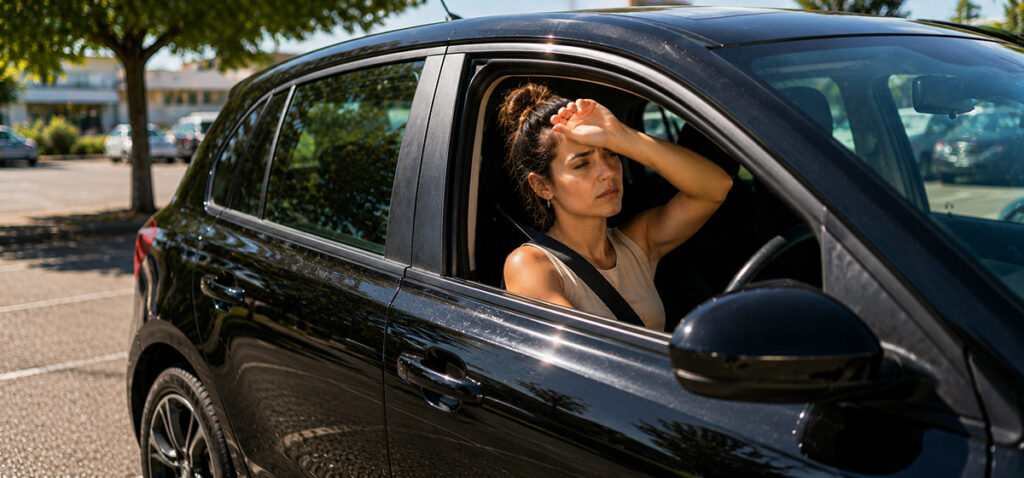
When the sun comes out, most of us think about keeping ourselves cool. But while we’re reaching for sunglasses and cold drinks, our cars are also feeling the effects of rising temperatures.
Modern vehicles are designed to cope with warm weather, but prolonged periods of heat can still affect everything from your tyres to your battery. The good news is that a few simple checks can help you stay one step ahead.
Here are 5 hidden ways hot weather can affect your car, plus tips for driving in the heat and keeping your dog safe on summer trips.
1. Your tyre pressure can change
As temperatures rise, so does the air pressure inside your tyres. That doesn’t necessarily mean you’ll have a problem, but tyres that are already overinflated can become even firmer during a heatwave. On the other hand, underinflated tyres may wear more quickly and affect handling.
Checking your tyre pressures every couple of weeks, and before a longer journey, is one of the simplest ways to help keep your car performing as it should.
2. Your battery works harder than you might think
Cold weather is often blamed for flat batteries, but hot weather can be just as demanding. High temperatures can speed up chemical reactions inside the battery, causing it to wear more quickly over time. Heat can also increase the rate at which battery fluid evaporates, particularly in older batteries.
If your battery is already nearing the end of its life, a heatwave could expose an issue that wasn’t obvious before.
3. Your engine has to keep its cool
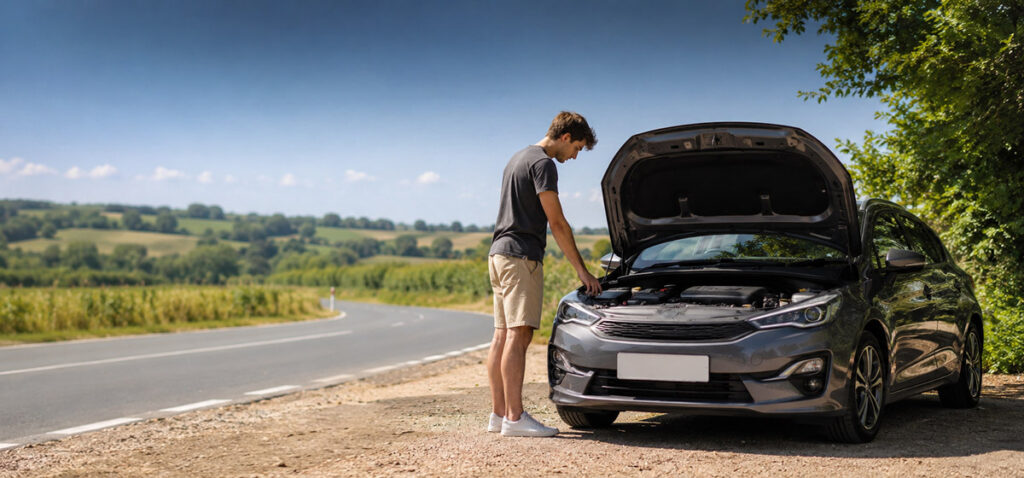
Your engine naturally generates a lot of heat while you’re driving. In hot weather, the cooling system has to work even harder to keep everything at the right temperature. That’s why it’s important to make sure your coolant is at the correct level (although you should wait until the engine has cooled before topping up), and to keep an eye on your temperature gauge during longer journeys.
If your engine ever starts overheating, it’s safest to stop somewhere suitable as soon as it’s safe to do so and allow it to cool before investigating further.
4. Your car can get hotter than you realise
Even on a pleasantly warm day, the inside of a parked car can heat up surprisingly quickly. That’s why it’s important never to leave children or pets inside a parked vehicle, even for a short time.
Using a windscreen sunshade where possible, parking in the shade and allowing hot air to escape before setting off can all help make driving more comfortable.
5. Small windscreen chips can become bigger problems
A tiny stone chip might not seem like much, but hot weather can sometimes make existing damage worse. As the glass heats up and cools down, it naturally expands and contracts. If there’s already a weak point in the windscreen, that movement can increase the chance of a crack developing.
It’s another reason why it’s worth dealing with small chips early, before they turn into larger repairs.
Driving in hot weather
Heat doesn’t just affect your car. It can leave you tired, thirsty and slower to react, especially on a long drive or in a queue of traffic.
Plan your journey
Before a long drive, plan where you can stop for a break, find some shade and buy a cold drink. Take plenty of water with you, ideally in an insulated bottle or a cool bag, and check your air conditioning is working before you set off.
Sunny bank holidays and summer weekends mean busier roads, so you’re more likely to get stuck in traffic in the heat. Allow extra time, and keep the car cool so you stay alert.
Give your car a once-over
Before a summer road trip, run through a quick FLOWER check: fuel, lights, oil, water, electrics and rubber (your tyres). Our car maintenance checklist takes you through each one.
Sunglasses and glare
Low sun and glare can make hazards hard to spot. Keep your windscreen clean inside and out, use your sun visor and keep a pair of sunglasses in the car.
Avoid very dark lenses. Sunglasses labelled category 4 aren’t suitable for driving at all, and the Highway Code says not to wear tinted glasses at night or in poor visibility if they restrict your vision.
Can you drive in flip-flops?
It isn’t illegal to drive in flip-flops, sandals or bare feet. But the Highway Code says your footwear shouldn’t stop you using the controls properly, and flip-flops can slip off or get stuck under a pedal. Keep flat shoes in the car and change before you drive.
Travelling with your dog in hot weather
Cars heat up fast in summer, and dogs find it much harder to cool down than we do.
Never leave your dog in a parked car
Not even for a few minutes, and not even with a window open or the car parked in the shade. An open window doesn’t cool a parked car enough, and dogs left in hot cars can develop heatstroke, which can kill.
It isn’t illegal to leave a pet in a car, but you’re legally responsible for your animal’s welfare. If your dog suffers, you could be prosecuted under animal welfare laws.
Keep your dog safe on the journey
- Keep them secure. The Highway Code says animals should be suitably restrained so they can’t distract you, or injure you or themselves if you stop quickly. A seat belt harness, pet carrier, dog cage or dog guard can all do the job.
- Bring plenty of water and a bowl, and stop for regular breaks.
- Travel at cooler times of day if you can, and use sunshades on the rear windows.
- Check the ground before a walk. If the pavement or sand feels too hot on the back of your hand, it’s too hot for paws.
- Pack the basics: a lead or harness, poo bags, food, water, a few toys and a towel to protect the seats.
The PDSA has more advice on safe car travel for pets.
What to do if you see a dog in a hot car
If the dog is showing signs of heatstroke, such as heavy panting, drooling, or being drowsy or collapsed, call 999 straight away. If you’re thinking of breaking in to help, tell the police first. Without good reason, damaging someone’s car could count as criminal damage.
Stay cool, and keep your car cool too
Most cars cope perfectly well with warm weather, but a little preparation can make all the difference. Checking your tyres, keeping an eye on your battery, topping up your coolant and dealing with small windscreen chips are small jobs, but they can help you avoid unwanted surprises on the road.
Looking for somewhere to go? Our guide to the best UK coastal road trips includes places to escape the heat. And if you’re sharing the driving on a spontaneous day out or weekend away, take a look at our temporary car insurance.