Driving without insurance
It’s illegal to drive without insurance – and an extremely serious offence to do so. It’s also not uncommon for those with insurance to still be penalised for having the wrong details on their policy so, mistakes can also be costly.

It’s illegal to drive without insurance, and it’s an extremely serious offence.
It’s also not uncommon for drivers who do have insurance to be penalised for having the wrong details on their policy, so mistakes can be costly too.
What are the penalties for driving without insurance?
The law says every car used on the road must have at least third-party insurance. If the police catch you driving without it, the punishment for driving without insurance is usually a fixed penalty of £300 and 6 penalty points on your licence.
The offence goes on your driving record as an IN10 endorsement, which stays there for 4 years. Insurers ask about convictions like this, so it’s likely to push up the price of your insurance for years afterwards.
More severe instances of driving with no insurance, like repeat offences or those combined with other offences such as having no MOT or no valid driving licence, result in higher penalties.
Should the case reach court, penalties escalate. You could face an unlimited fine, 6 to 8 penalty points and a driving ban. The police can also seize the car you were driving, and in some cases destroy it.
What is the maximum fine for driving without insurance?
There is no maximum fine for driving without insurance.
The fixed penalty is £300, but if the case goes to court, there’s no upper limit to how high the fine can be.
How long is the ban for driving without insurance?
A fixed penalty on its own doesn’t come with a ban. If your case goes to court, the court can disqualify you from driving straight away, and the length of the ban is up to the court.
How can the police tell if you’re driving without insurance?
The police can tell if you’re driving without insurance through number plate recognition.
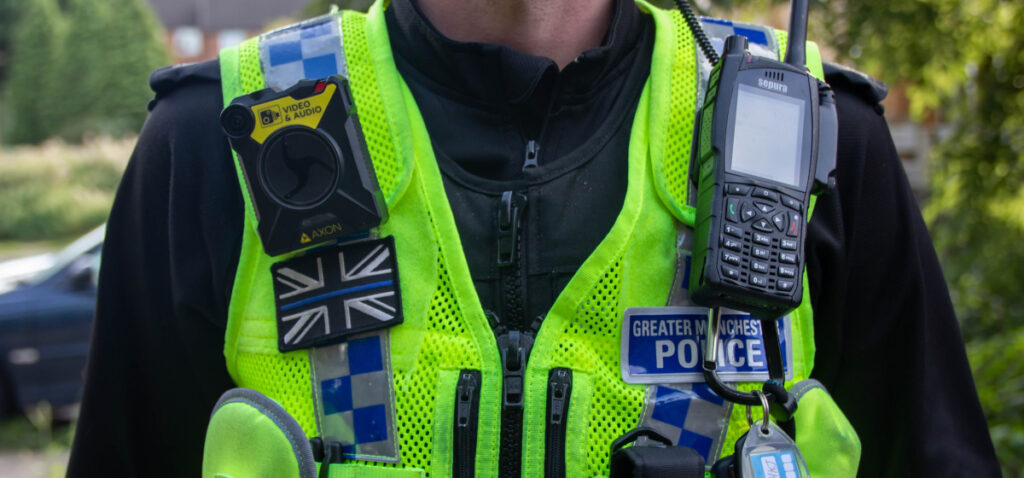
Police vehicles are often equipped with automatic number plate recognition (ANPR) cameras. These read number plates and check them against the Motor Insurance Database (MID), so the officer can see straight away whether the car has valid insurance, MOT and vehicle tax. You can run the same check on your own car using our guide to askMID.
If the police stop you on the roadside, they will often perform basic roadside checks. This involves taking a breath sample if they suspect drink driving and conducting manual insurance checks.
So, just because you’re not caught on camera, doesn’t mean you aren’t still at risk.
What if I’m stopped and can’t show my insurance?
If you can’t show proof of insurance there and then, you’ll usually have 7 days to take a valid certificate to a police station. It must show you were insured when you were stopped, so it helps to keep your policy documents on your phone.
New policies can take a few days to appear on the MID. If you’re genuinely insured but don’t show up yet, your certificate is your proof.
Will driving without insurance result in a criminal record?
Driving without insurance is a criminal offence, but it can’t be punished with prison.
A fixed penalty isn’t a criminal conviction. If your case goes to court and you’re convicted, that conviction can show up on criminal record checks, such as a basic DBS check, until it’s spent.
Either way, it’s an extremely serious offence and shouldn’t be taken lightly.
Short trips, car parks and practice drives: common mistakes
When we surveyed 2,000 UK adults in 2025, 1 in 6 drivers admitted they had driven without valid insurance. Learner drivers were twice as likely to have done it as full licence holders.
Most of it came down to misunderstanding the rules. None of these beliefs is true:
- You don’t need insurance for a short trip
- Learners practising with a friend or family member don’t need their own cover
- It’s legal to drive uninsured in a car park
- Cul-de-sacs don’t count
The law applies on roads and in other public places, which includes public car parks. A short drive to the shops counts just as much as a long one.
What to do if you’re hit by an uninsured driver
If you’re hit by an uninsured driver, contact your insurance company and the police immediately.
Sadly, it’s the drivers who stick to the law who are most affected when an uninsured driver causes an accident.
If the accident was your fault, an uninsured driver can still claim for damage to their car and for personal injury, despite their offence.
If the accident was the uninsured driver’s fault, you may be able to claim on your own policy, which could mean paying your excess. The Motor Insurers’ Bureau (MIB) exists to compensate people hurt or out of pocket because of uninsured and untraced drivers, so speak to them or your insurer about what you can recover.
Does fully comprehensive insurance cover any car or vehicle you drive?
Fully comprehensive cover alone doesn’t cover you to drive any vehicle other than the one named on your policy.
Some fully comprehensive policies include ‘driving other cars’ (DOC) cover. It’s becoming less common, it’s often third party only, and the conditions vary between insurers. Check your policy wording before you rely on it.
When don’t you need car insurance?
You don’t need insurance on a car you’ve officially taken off the road.
If you declare your car off the road with a Statutory Off Road Notification (SORN), you don’t need to insure it while it’s kept off the road.
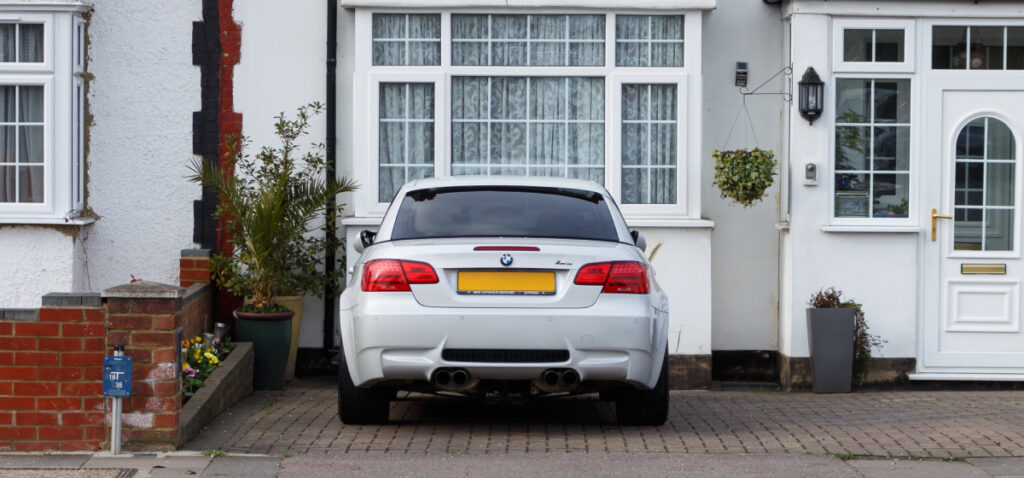
Otherwise, every registered car has to be insured, even if it’s just parked on your drive. This is called continuous insurance enforcement. If the database shows your car isn’t insured, you’ll get an Insurance Advisory Letter. Ignore it and you could get a £100 fixed penalty, have the car clamped, impounded or destroyed, or be taken to court.
With temporary car insurance, you pay only for the time you need, which can suit drivers who only drive now and then.
Frequently asked questions
What are ‘special reasons’ for driving without insurance?
There’s no excuse for choosing to drive without insurance. No matter the reason, it’s punishable by fines, bans and even court action.
However, a court can sometimes accept ‘special reasons’. They don’t stop you being found guilty, but they can be taken into account when the penalty is decided. Examples include:
- Your insurer cancelled your policy without telling you
- You were wrongly told you had valid insurance
- Your insurer was at fault for your insurance being invalid
What if I forget to renew my policy?
Forgetting to renew isn’t a valid reason, so you’d still be penalised. It’s one of the most common ways people end up uninsured without realising, so check when your cover ends.
If your car is parked on the road but you’re not driving it, does it need to be insured?
Yes. If you’re going to leave a car parked on the road, it must be insured.
As a minimum, it needs third-party insurance, which covers damage it causes to other people and their property. The only exception is a car that’s SORN and kept off the road.
Am I able to drive on private land in an uninsured vehicle?
Yes, you can.
If you own the land and the public can’t access it, you don’t need any legal documentation to drive a vehicle there. However, as soon as you leave that land, even if it’s just for access or exit, you must have appropriate insurance.
Remember that public car parks aren’t private land in this sense, so you need insurance to drive in them.
Can I drive an uninsured car or van with my insurance?
Only if your own policy specifically allows it. Some policies with DOC cover have conditions about the other car, so check your policy wording first.
If your policy doesn’t cover you, you need to take out a policy that does before you drive.
What happens if I get a court summons for driving without insurance?
If you have received a court summons for driving without insurance, there’s a higher likelihood that you’ll face a penalty more than the standard £300 and 6 points on your licence.
Can I report someone for driving without insurance?
Yes, you can. In fact, it’s recommended that you do so.
If you suspect that someone is driving without insurance, or you know that they are, you should report it to the police as soon as possible.
Should I drive to an MOT without insurance?
No, you shouldn’t.
There’s an exception for driving without a valid MOT, as long as you’re driving to a pre-booked MOT test or to a garage for repairs. There are no exceptions for driving without insurance.
The same goes for a SORN car. You can drive it to a pre-booked MOT, but it still needs to be insured for the journey. Our guide to MOT checks explains what’s tested.
There is no link between having a valid MOT test and having insurance. To be able to drive legally, you need both.
Can I drive a new car home without insurance?
No. You need insurance in place before you drive a new car away, so sort your cover before you collect it.
Can I drive someone else’s car without insurance?
No, it’s illegal. You need to be insured to drive the car, either through your own policy or a policy that covers you on that car. Our guide to borrowing a friend’s car explains your options.
Can you drive a car as a learner without insurance?
No, learners need insurance too, including when they practise with a friend or family member. Read our guide to learning to drive, and see our learner driver insurance for practice in someone else’s car.
Can you test drive a car or van without insurance?
Not without someone’s insurance covering you.
At a dealership, you’re usually covered by the dealer’s own motor trade insurance, but ask them to confirm. If you’re buying from a private seller, check you’re insured to drive the car before you take it out, as the seller’s policy may not cover you.
Car insurance without the long-term commitment
Need to borrow a friend’s car or take a day trip? Veygo temporary car insurance gets you on the road in minutes, and you pay only for the time you need. For longer, there’s monthly rolling cover.