



Passing your driving test is a huge moment.
It is the point where all the lessons, practice and nerves turn into something bigger: independence.
Your first car can open up new freedom. Seeing friends. Getting to work. Going to college or university. Helping out at home. Taking yourself where you need to go, without relying on someone else.
But choosing your first car is a big decision. The right one should help you feel confident, safe and in control. It should suit your budget, your journeys and your experience as a new driver.
It does not need to be the fastest or flashiest car.
It just needs to be the right car for you.
Start with the full cost, not just the car price
When you are buying your first car, it is easy to focus on the price you pay upfront.
But owning a car comes with other costs too.
- Insurance
- Fuel or charging
- MOT
- Servicing
- Repairs
- Tyres
- Parking
- Road tax, where applicable
- Breakdown cover
- Finance payments, if you have them
A car might look affordable to buy, but that does not always mean it will be affordable to own.
Before you commit, work out what you can afford each month. That will give you a clearer idea of what kind of car makes sense.
Check insurance before you buy
For many new drivers, insurance is one of the biggest costs of owning a car.
That is why it is worth checking insurance quotes before you buy, not after.
Some cars are easier and more affordable for new drivers to insure. These are often smaller, less powerful, common, standard cars with lower repair costs.
A good rule of thumb: if a car is fast, powerful, modified or expensive, it is likely to cost more to insure as a new driver.
Checking first helps you stay informed and avoid buying a car that stretches your budget.
Think carefully about the car you learned in
Many learners practise in a parent’s or relative’s car. That extra practice can be a great way to build confidence before your test.
But the car you learned in may not be the best option once you pass.
As a learner, you are driving with the required supervision in place. After you pass, you are driving independently. A family car may be larger, more powerful or more expensive to insure than a typical first car.
Before assuming you will keep driving the same car, check what it would cost to insure as a newly qualified driver.
It might still work. But it is better to know before you make plans.
Choose a car that builds confidence
Your first car should help you feel calm, capable and ready for the road.
Look for something that is:
- Easy to drive
- Easy to park
- Comfortable and predictable
- Sensible rather than overly powerful
- Affordable to insure
- Affordable to repair
- Reliable
- Right for your everyday journeys
Confidence matters. A car that feels manageable can help you build better habits and feel more in control as you gain experience.
Keep safety front of mind
Being independent does not mean doing everything alone.
The right car can support you while you keep learning on the road.
Useful safety features can include:
- Good visibility
- Anti-lock braking
- Stability control
- Airbags
- Parking sensors or a reversing camera
- Lane support or driver assistance features
- Autonomous emergency braking, where available
Be careful with modified cars
Modified cars can look appealing, especially if you want something that feels personal.
But modifications can affect insurance. Even changes that seem cosmetic may need to be declared.
For a first car, a standard, unmodified car is often the simpler and smarter choice. It can make insurance easier to arrange and help keep costs more manageable.
Choose a car that fits your life
There is no one-size-fits-all first car.
The right choice depends on how you will actually use it.
Think about:
- Will you mainly drive short local journeys?
- Will you commute?
- Will you use motorways?
- Will you need space for passengers?
- Will you need room for work, college, sport or hobbies?
- Will you park on a driveway, street or in a car park?
A car that suits your day-to-day will help driving feel more natural.
Petrol, diesel, hybrid or electric?
The best fuel type depends on your journeys and budget.
For many new drivers doing shorter local trips, a small petrol car can be a practical first choice.
Diesel may suit longer journeys, but it may not be ideal for short trips or city driving – and will incur additional costs if entering a ULEZ zone.
Hybrid and electric cars can be efficient, but they may cost more to buy. Insurance, charging access and repair costs are worth checking before you decide.
Whatever you choose, make sure it fits the way you will actually drive.
Questions to ask before buying
Before you buy your first car, ask:
- Can I afford the insurance?
- Is it suitable for a new driver?
- Is it easy to drive and park?
- Is it reliable?
- Does it have a valid MOT?
- Has it been serviced regularly?
- Are the tyres, brakes and lights in good condition?
- Has it been modified?
- What could repairs cost?
- Does it suit my everyday journeys?
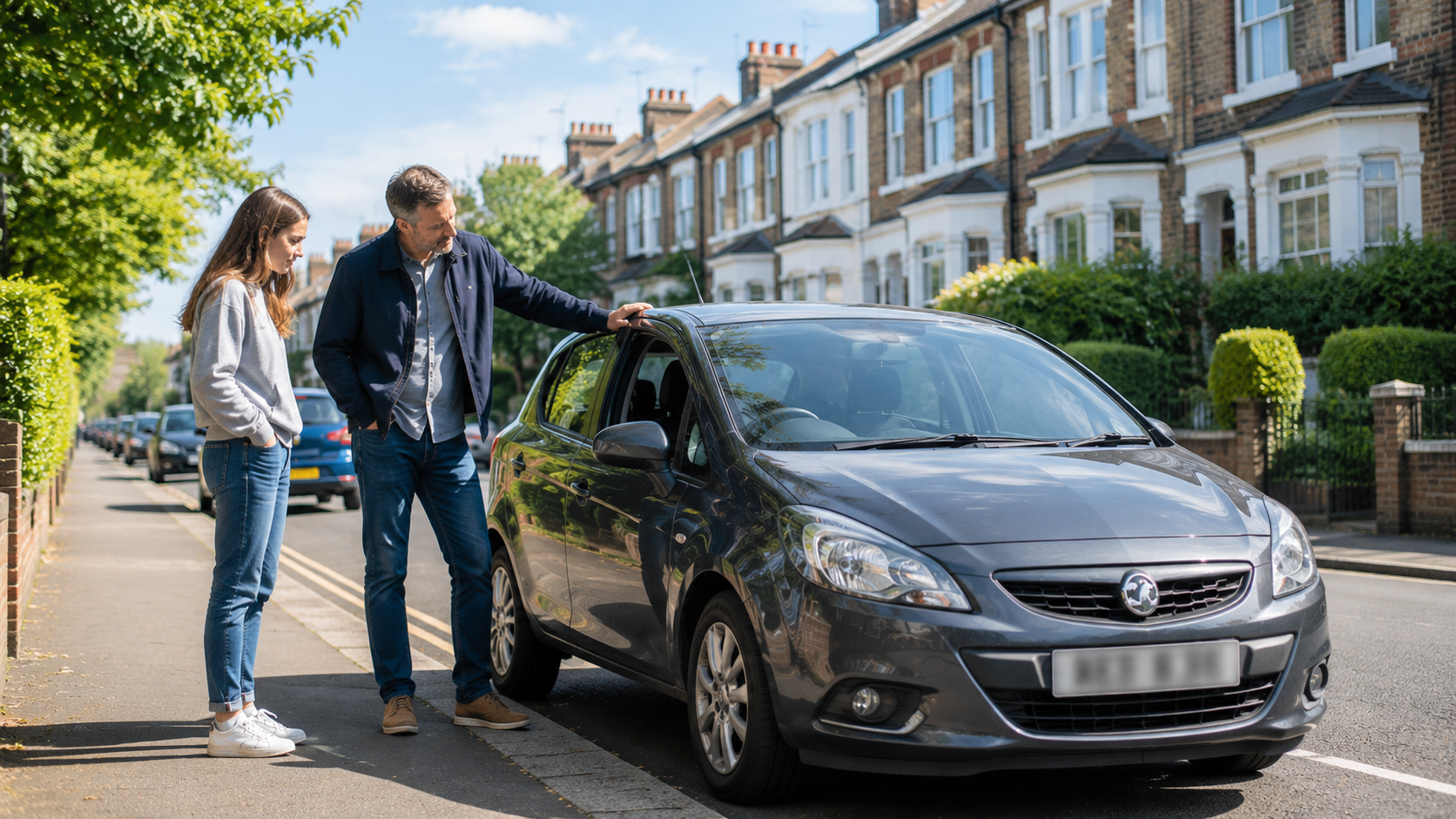
If you are unsure, take someone experienced with you when viewing a car.
A second opinion can help you make a more confident decision.
Don’t rush it
It is natural to want your first car as soon as you pass.
But rushing can lead to expensive mistakes.
Take your time. Compare a few cars. Check insurance. Look at running costs. Think about what you need now, not just what looks good online.
Your first car does not have to be your dream car forever.
It just needs to be a smart, safe and confidence-building step into independent driving.
Final thought
Your first car is more than a set of wheels.
It is the start of your independent driving life.
Choose something that helps you feel safer, more informed and more confident on the road. Check the insurance, understand the running costs and pick a car that supports the driver you are becoming.