

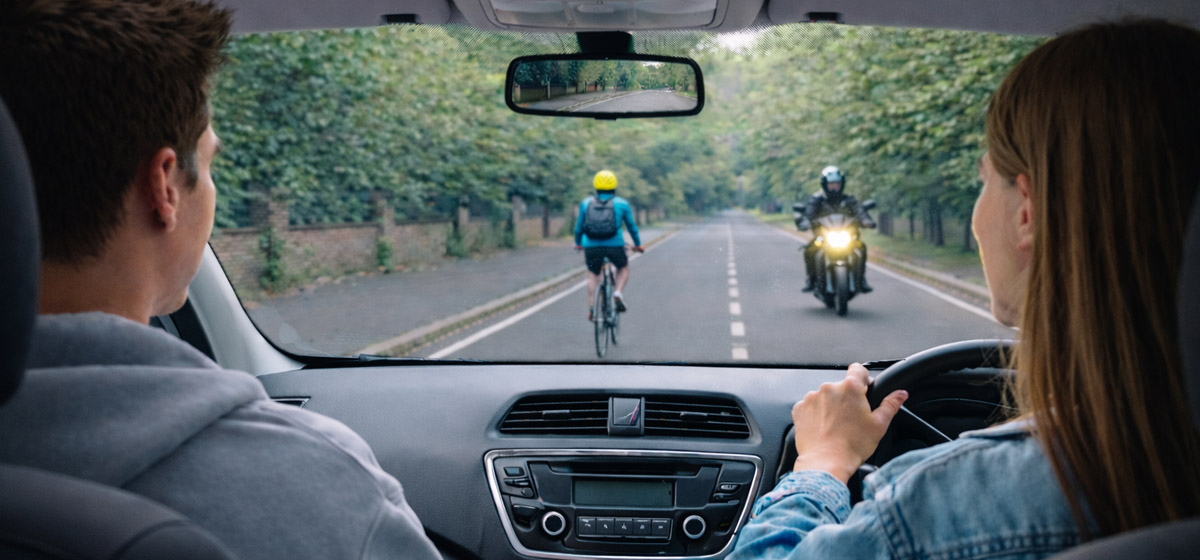


Whether you’ve just passed your test or you’ve been driving for years, one thing’s certain: UK roads are shared spaces. From city-centre commuters on bikes to motorcyclists enjoying a weekend ride through the countryside, understanding how to drive safely around more vulnerable road users is an essential skill.
Here’s what every UK driver should know about sharing the road with cyclists and motorbikes.
Why extra care matters
Cyclists and motorcyclists don’t have the protective shell of a car. Even a low-speed collision can result in serious injury. According to data published by the Department for Transport, riders of two-wheeled vehicles are among the most vulnerable road users in Great Britain.
As a driver, that doesn’t mean you’re automatically at fault in every incident – but it does mean you have a responsibility to stay alert and anticipate risks.
Overtaking cyclists safely
Overtaking a cyclist isn’t the same as overtaking another car.
Under updates to the Highway Code introduced in 2022, drivers should:
- Leave at least 1.5 metres when overtaking cyclists at speeds of up to 30mph
- Leave more space at higher speeds
- Wait behind a cyclist if it’s unsafe or not possible to overtake with sufficient clearance
If you can’t give that space, don’t squeeze past. Hang back. A few seconds of patience could prevent a serious collision.
Also remember that cyclists:
- May ride in the centre of the lane on narrow roads
- Are allowed to ride two abreast
- May move out to avoid potholes or drains
This isn’t bad riding – it’s often the safest option for them.
Understanding junction risks
Junctions are one of the most common locations for collisions involving cyclists and motorcyclists.
When turning left:
- Check mirrors carefully
- Look over your left shoulder for a lifesaver check
- Be aware of cyclists filtering on your left
When turning right:
- Watch for oncoming motorcyclists – they can appear smaller and further away than they really are
Take extra care at roundabouts too. Cyclists may take the lane for visibility. Motorcyclists may position themselves differently from cars for safety and balance.
Never assume you’ve seen everything after a quick glance.
Filtering motorbikes
In slow-moving traffic, motorcyclists are legally allowed to filter between lanes. It can feel surprising if you’re not expecting it, especially in heavy traffic.
If you notice a motorbike filtering:
- Avoid sudden lane changes
- Check mirrors before opening your door in stationary traffic
- Signal clearly and in good time
Motorcyclists are trained to anticipate hazards, but they rely on drivers being predictable.
Safe door-opening to protect cyclists
One of the biggest urban risks for cyclists is ‘dooring’ – when a car door is opened into their path.
A simple technique can help prevent this: instead of opening your door with your hand nearest the handle, use your opposite hand. This naturally turns your body and encourages you to look over your shoulder for approaching cyclists before stepping out.
It’s a small habit that can make a big difference, particularly in busy towns and cities.
Be extra cautious in rural areas
While cities often get the most attention, rural roads can pose serious risks too.
Motorcyclists often enjoy scenic routes and may be travelling at speed on open stretches. Meanwhile, cyclists might be navigating narrow country lanes with limited passing places.
On these roads:
- Slow down on bends
- Expect the unexpected
- Avoid overtaking near blind summits
Remember, a motorbike can close a gap much faster than you might think.
Night-time and poor weather driving
Visibility is critical. Cyclists are legally required to use lights after dark, but not all clothing is high-vis and bike lights can sometimes blend into background lighting. Motorcyclists use dipped headlights during the day, but glare, rain and spray can reduce how clearly you see them.
In poor weather:
- Increase your following distance
- Take extra time at junctions
- Double-check blind spots
A mindset shift: patience and awareness
Sharing the road safely isn’t just about rules – it’s about mindset.
- Expect cyclists in urban areas, especially near cycle lanes and parks
- Expect motorcyclists when traffic is heavy or the weather is good
- Don’t rush overtakes
- Don’t let frustration dictate your decisions
Most journeys only take a few minutes longer when you drive patiently, but the safety impact can be significant.
It works both ways
While this guide focuses on drivers, road safety is a shared responsibility. Cyclists, motorcyclists and drivers all have a part to play in keeping UK roads safer.
Whether you’re a learner building confidence, a new driver gaining experience, or someone who’s been behind the wheel for decades, staying aware of more vulnerable road users is simply part of being a responsible motorist.
A little extra space. A little extra time. A lot more safety.
Ready to put what you’ve learned into practice? Make sure you’re covered for every journey.