

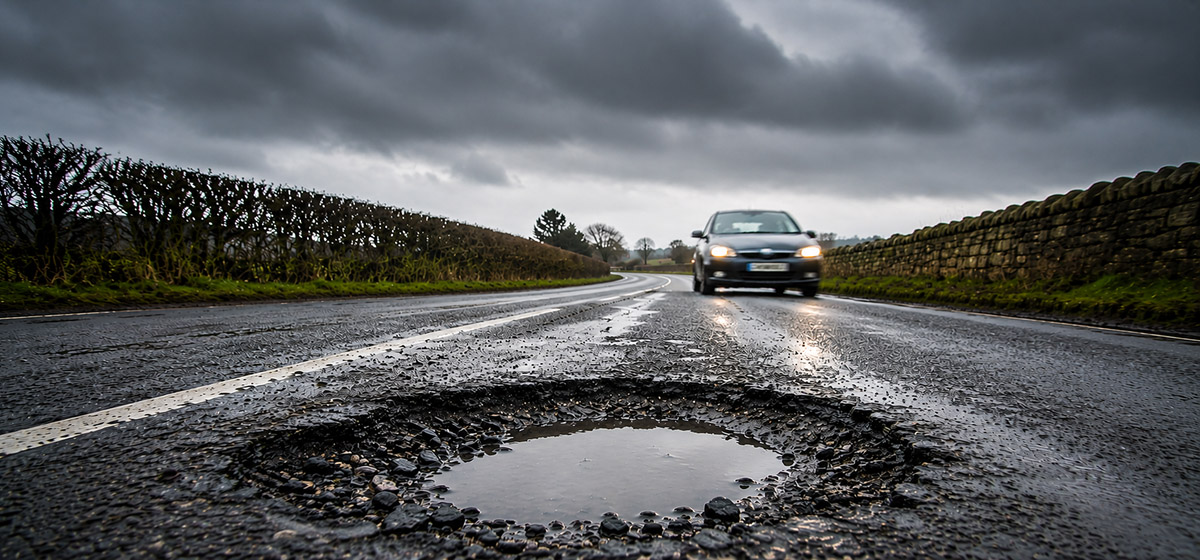


You don’t have to drive very far in the UK before spotting one.
Whether it’s a shallow dip in the road or a crater-sized hole you instinctively swerve around, potholes have become an all-too-familiar part of driving. But why do they seem to be such a problem in the UK – and why do they often feel like they come back just as quickly as they disappear?
The answer is a mix of weather, wear and tear, and how roads are maintained over time.
Why the UK gets so many potholes
One of the biggest reasons potholes are so common in the UK is the weather. Our roads go through a lot. Frequent rain, colder temperatures and changing conditions can all weaken road surfaces over time.
It often starts with a small crack in the tarmac. Water seeps in, temperatures drop, and that water expands as it freezes. Over time, repeated freezing and thawing can weaken the road from the inside.
Once traffic repeatedly passes over those weakened areas – especially heavier vehicles like vans and lorries – the surface can begin to break apart, eventually creating a pothole.
The UK’s roads also carry a significant amount of traffic relative to their size, meaning many surfaces are under constant pressure. Over time, repeated use can speed up wear and tear, particularly on busier routes or roads used regularly by heavier vehicles.
Add together changing weather, heavy road use and ageing surfaces, and it’s easy to see why potholes can become such a recurring issue on UK roads.
Why potholes seem to come back
If you’ve ever thought, “Didn’t they just fix this road?”, you’re definitely not alone. Part of the reason potholes can reappear is that not all repairs work in exactly the same way.
Some repairs are designed to stabilise damage quickly and make roads safe again, particularly when problems need addressing fast. In other cases, roads may undergo more extensive resurfacing work designed to last longer.
The challenge is that roads are constantly under pressure from weather and traffic, so even repaired sections can deteriorate again over time – especially if the underlying road surface is already weakened.
It’s one reason why potholes can sometimes feel like a never-ending problem for drivers.
How potholes can cause accidents
While potholes are frustrating, they can also create genuine safety risks. Often, the danger isn’t just the pothole itself – it’s how drivers react to it.
Swerving suddenly to avoid a pothole, braking sharply at the last second or moving unexpectedly around damaged road surfaces can increase the risk of collisions, particularly on busier roads.
Potholes can also become harder to judge in wet weather, when standing water disguises how deep they really are.
For cyclists and motorcyclists especially, uneven road surfaces can be even more hazardous, affecting balance and grip.
The best approach is usually to stay alert, scan further ahead and avoid making sudden movements where possible.
Can potholes damage your car?
Unfortunately, yes.
Hitting a pothole at speed can sometimes affect:
- Tyres
- Wheel alignment
- Suspension
- Steering
In some cases, drivers may notice the steering feels different afterwards, the car pulls slightly to one side, or vibrations feel more noticeable than usual.
Of course, not every pothole causes damage – but larger or deeper ones can have more of an impact than many people realise.
Can the problem improve?
There’s no instant fix for potholes, but road repair methods continue to evolve. New materials, preventative maintenance and technology that helps spot road damage earlier are all helping improve how road surfaces are managed over time.
But for now, potholes remain one of the realities of driving in the UK – making it more important than ever to stay alert to the road ahead.
Because while you can’t always avoid every pothole, spotting problems early and reacting calmly can help make every journey feel a little smoother – and safer.
While you can’t always avoid every bump in the road, having cover that fits around real-life driving can help make the journey feel a little smoother. Veygo offers flexible cover designed around the way you actually drive.