

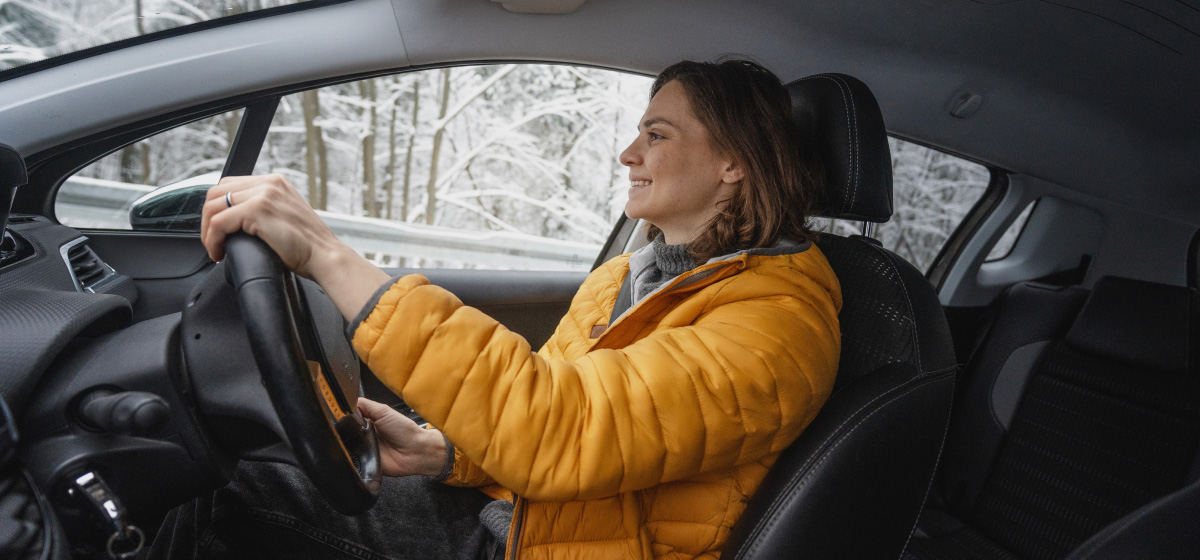


Over the last few days, many parts of the UK have seen snow and icy conditions – and with more winter weather expected, it’s a good time to refresh your knowledge on how to drive safely when the roads turn slippery. For learner drivers and those new to driving, winter conditions can feel especially daunting, but with the right preparation and techniques, you can reduce risks and stay in control.
Here’s our practical guide to driving in snow and ice.
Before you set off: preparation is key
The safest journey in icy conditions is often the one you don’t make. If your trip isn’t essential, consider delaying it until conditions improve. If you do need to drive, a little preparation can make a big difference.
Start by checking the weather forecast and traffic updates so you know what to expect. Allow extra time for your journey – rushing increases the risk of mistakes.
Make sure your car is winter-ready:
- Clear all snow and ice from windows, mirrors, lights and the roof before driving off.
- Check your tyre tread depth (the legal minimum is 1.6mm, but more grip is better in winter).
- Ensure your windscreen washer fluid contains antifreeze and is topped up.
- Keep essentials in the car, such as warm clothing, a phone charger, a torch, and de-icer.
Good visibility and grip are vital when roads are icy.
Moving off and controlling your speed
When driving on snow or ice, smoothness is everything. Sudden movements can cause you to lose control.
Move off gently, using low revs. If your car allows it, starting in second gear can reduce wheel spin. Once moving, keep your speed low and consistent. Even if the road looks clear, patches of ice can be hard to spot – especially in shaded areas, on bridges, and early in the morning or late at night.
Remember that stopping distances increase dramatically in icy conditions. Leave a much larger gap than usual between you and the vehicle ahead – up to ten times the normal distance if the road is very slippery.
Steering, braking and gears
Steering should be smooth and gradual. Avoid sharp turns, as these can cause the tyres to lose grip. If the car starts to slide, gently ease off the pedals and steer smoothly in the direction you want the front of the car to go.
When braking:
- Brake early and gently.
- If your car has ABS, apply steady pressure to the brake pedal and let the system work.
- If it doesn’t, use gentle cadence braking to avoid locking the wheels.
Use higher gears where possible to help reduce wheel spin, and avoid unnecessary gear changes on slippery roads.
Hills, junctions and rural roads
Hills can be particularly challenging in snow and ice. Try to maintain a steady speed when going uphill and avoid stopping if possible. When going downhill, slow down well before the slope and use engine braking by selecting a lower gear.
Approach junctions with extra caution. Brake earlier than usual and be prepared for other drivers to struggle with stopping or pulling away.
Rural roads can be especially hazardous in winter. They’re often untreated and may look clear while hiding ice underneath. Drive defensively and be ready to react.
What to do if you skid
Skids are scary, especially for new drivers, but staying calm is crucial.
If your car skids:
- Do not slam on the brakes.
- Ease off the pedals.
- Steer smoothly into the skid (towards where the front of the car needs to go).
Modern cars are designed to help regain control, but your inputs still matter.
Know when to stop
If conditions become too dangerous – heavy snowfall, freezing rain, or very poor visibility – the safest option may be to pull over somewhere safe and wait. No journey is worth risking your safety.
Final thoughts
Winter driving in the UK can be unpredictable, but good preparation, patience and smooth driving techniques go a long way. For learner drivers and those new to the road, it’s completely normal to feel nervous – take your time, build confidence gradually, and don’t be afraid to postpone a journey if conditions feel unsafe.
Staying informed and driving cautiously helps keep you – and everyone else on the road – safer this winter.
If you’re getting extra practice in winter conditions, make sure you’re covered for every trip.